Items prohibited from being posted: what not to put in your parcel, how it’s detected and what it will cost you
Every year, thousands of parcels are held up, returned or destroyed because they contain items that are prohibited from being sent. In many cases, the sender was unaware that the item was prohibited — in other cases, they deliberately chose not to declare it. The result is the same: the parcel does not arrive, costs rise, and legal liability falls entirely on the sender. This guide explains What items are prohibited from being posted, why they are detected, and what actually happens when a courier intercepts items that are prohibited from being posted.
🚫 CATEGORIES OF ITEMS NOT ACCEPTED FOR SHIPMENT
🌿 1. Organic Plants and Products
- Live or semi-live plants
- Seeds, bulbs, cuttings and soil containing organisms
- Untreated fresh vegetable products
- Agricultural products subject to phytosanitary restrictions
📌 Reason: risk of contamination, parasites or infection, customs restrictions and health regulations.
⚠️ For international shipments to non-EU countries (Australia, the USA, Canada, Japan), phytosanitary restrictions are among the strictest in the world. An undeclared plant twig can lead to the seizure of the entire parcel and significant fines.
🐾 2. Animals and Products of Animal Origin
- Live animals (birds, reptiles, insects, fish, mammals, etc.)
- Animal remains or parts (raw skin, bones, trophies, tusks, horns, ivory, etc.)
- Products derived from protected species (CITES)
📌 Reason: protection of animal welfare and compliance with international conventions (e.g. CITES).
🚫 The CITES Convention protects thousands of species. The unauthorised trade in products derived from these species (including ivory – even antique ivory – and certain furs) is a criminal offence in all signatory countries. In Italy, penalties can be as high as €150,000 and six years’ imprisonment (Legislative Decree 275/2001).
💎 3. Objects of Value or Luxury
- Cash, cheques, securities
- Jewellery, precious metals, precious stones
- Works of art, paintings, antiques
- Active credit or debit cards
- Valuable collections (rare coins, stamps, etc.)
📌 Reason: high risk of theft or loss; requires insurance and special transport channels.
💡 The reason for the ban is simple: express couriers have maximum reimbursement limits per parcel (usually €100–500 without additional insurance). Cash and jewellery cannot be insured under standard procedures. Using a express courier The transport of large amounts of cash is also subject to anti-money laundering regulations.
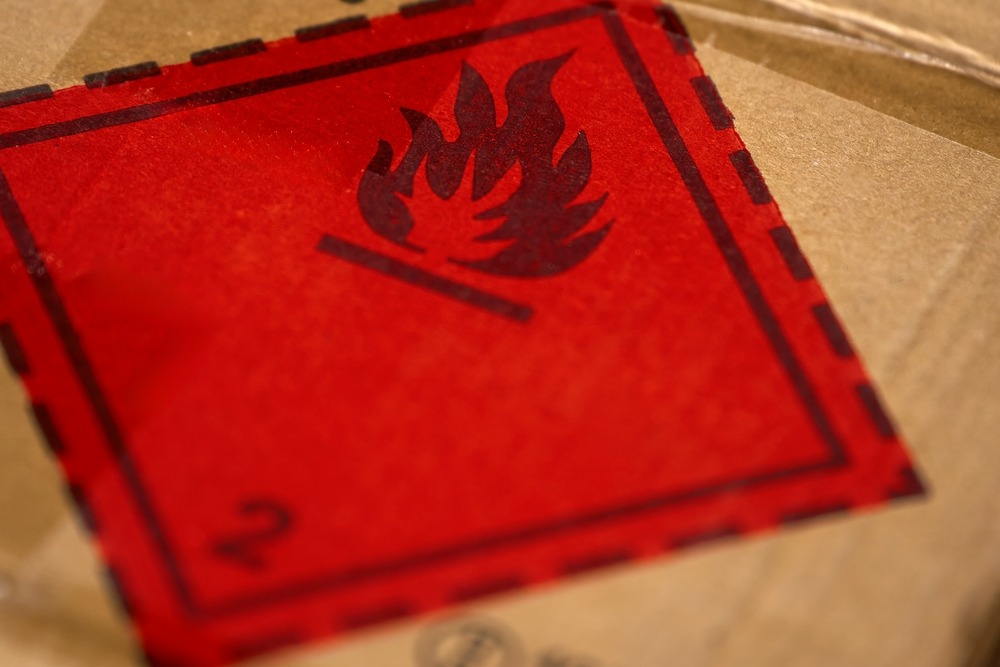
☠️ 4. Hazardous Materials and Prohibited Goods
- Explosives, ammunition, fireworks
- Compressed, flammable or toxic gases (e.g. cylinders, sprays, deodorants)
- Flammable liquids (petrol, solvents, alcohol, perfumes, paints)
- Corrosive or toxic chemicals (acids, bleach, pesticides)
- Unsealed or defective lithium batteries
📌 Reason: security risk for air and land transport (IATA and ADR regulations).
🚫 Dangerous goods pose the greatest risk to air freight. A parcel containing flammable liquids that leaks in the hold can cause a fire. For this reason, the IATA-DGR regulations and ENAC rules make no exceptions: anyone who fraudulently fails to declare dangerous goods is committing a criminal offence punishable by law in all countries.
🧬 5. Medical and Biological Materials
- Biological or pathological samples
- Blood, plasma, organs, human tissue
- Drugs undeclared or without customs authorisation
📌 Reason: health regulations and special authorisations required for medical transport.
⚙️ 6. Illegal or Restricted Goods
- Drugs, narcotics, accessories for illegal use
- Firearms, knives, air guns
- Counterfeit goods or goods infringing trade mark rights
- Pornographic or offensive material
- Products subject to international embargoes or sanctions
📌 Reason: national and international legal prohibitions.
📦 7. Other Generally Not Accepted Items
- Fresh or perishable foodstuffs (meat, fish, cheese, etc.)
- Alcoholic beverages (depending on destination and courier)
- Original official documents (passports, certificates, degrees)
- Ashes or human remains
📌 Reason: customs or health restrictions or risk of deterioration.
✈️ Air express vs 🚛 intra-EU lorry: they’re not the same thing
First of all, there is a fundamental distinction that almost no one explains: the risk of being discovered — and the consequences — vary radically depending on the type of shipment.
| ✈️ Express deliveries (by air) | 🚛 Road courier (within the EU) | |
| Security checks | Required by IATA/ENAC regulations on every cargo flight | Spot checks; no EU-to-EU customs checks |
| Scanners and X-rays | Yes — airport hubs (e.g. Malpensa, Fiumicino) | Only in the event of a specific inspection |
| Probability of detection | Very high — close to 100% for dangerous goods | Lower, but not zero |
| Destinations | The whole world | Mainly Shipments to Europe |
| Traditional couriers | DHL Express, FedEx, UPS Express | TNT trucks, DHL Freight, national couriers |
| Consequences of the discovery | Seizure, return, fine, destruction | Returns, additional costs |
| Legal basis | IATA DGR Regulations + ENAC regulations | ADR Regulations for the Carriage of Dangerous Goods by Road |
🚫 Anyone who thinks they can ‘hide’ dangerous items in an air consignment is seriously mistaken. All parcels entrusted to express couriers such as DHL, FedEx and UPS pass through airport hubs equipped with scanners and X-ray machines, as required by law. It is not a matter of chance: it is a systematic process.
⚖️ Dangerous goods transported by air are governed by the IATA-DGR regulations and, in Italy, by the’ENAC (Italian Civil Aviation Authority). Breaches may result in criminal as well as administrative penalties.
🔍 How are items that are prohibited from being posted detected?
Many senders believe that simply failing to declare the contents is enough to go unnoticed. In reality, express couriers have multiple, overlapping detection systems:
- Scanners and X-rays at airport hubs: Every parcel passing through a cargo airport is scanned. X-rays identify the shape of objects, the density of materials and the presence of liquids. Lithium batteries, gas cylinders and flammable liquids have distinctive, unmistakable signatures.
- Inconsistent weight and dimensions: If the declared weight does not match the measured weight, the parcel is held for a manual inspection. A parcel declared as “documents” that weighs 3 kg is automatically held.
- Inconsistent customs declaration: For shipments outside the EU, the description of the goods is checked against their weight, dimensions and declared value. Any obvious discrepancies trigger an inspection.
- Random inspections: Even in intra-EU truck-based delivery services, a percentage of parcels are opened for random inspection at sorting centres.
- Report by the recipient or a third party: In some cases, it is the consignee themselves — or a customs officer in the country of destination — who reports the suspicious contents.
- Risk profiling algorithms: Major courier companies use algorithms that identify suspicious patterns (sender, destination, frequency, weight) and automatically flag high-risk parcels for inspection.
⚠️ Vague descriptions such as “personal belongings”, “gift” or “samples” are among the first things to trigger checks. These fields are automatically analysed by the system, and vague descriptions increase the likelihood of an inspection, rather than reducing it.
📋 What happens when a parcel is held: the 3 scenarios
Scenario A — Return to sender (with additional costs)
This is the most common scenario for non-hazardous items that are prohibited from being posted (valuables, currency, restricted goods). The courier suspends the shipment and notifies the sender. The parcel is returned to the original address.
What this involves:
- Original postage cost: not refunded
- Returns charge: charged to the sender (may be equal to or exceed the original cost)
- Administrative charge for prohibited items: applied by almost all couriers (UPS, DHL and FedEx explicitly state this in their terms and conditions)
- Delay: from a few days to several weeks
- Any customs charges in the country of destination (for shipments outside the EU)
Scenario B — Seizure and fine
For items subject to specific legal restrictions (tobacco, alcohol to countries where it is prohibited, unauthorised medicines, protected flora and fauna), the parcel may be seized by customs authorities in the country of destination or transit. The sender will not be able to recover either the parcel or its contents.
What this involves:
- Permanent loss of content
- Administrative penalties in the country of destination — these can be substantial
- In some cases, criminal proceedings may be brought (e.g. trafficking in CITES-protected wildlife, drugs)
- The courier may seek compensation from the sender for any damage or costs incurred
Scenario C — Destruction of the parcel (the worst-case scenario)
In the case of dangerous goods (damaged lithium batteries, compressed gases, flammable liquids, chemicals), the courier or the customs authorities may proceed to destroy the parcel immediately for safety reasons. There will be no refund and the parcel cannot be recovered.
🚫 For dangerous goods transported by air, destruction is a standard safety procedure. A parcel containing faulty batteries or flammable liquids poses a real risk to the aircraft and its cargo. Safety takes precedence over everything else.
✅ Proper packaging won’t save a prohibited item, but it can make all the difference for everything else: intact lithium batteries that are packed correctly are far less likely to cause accidents or be classified as dangerous. Read the guide: The most common packaging mistakes to avoid
| Type of article | Most likely scenario | Estimated cost to the sender |
| Currency, jewellery, works of art | Refund | Original postage + return postage + administration fee |
| Perishable foodstuffs | Return or destruction | Delivery + disposal (if applicable) |
| Tobacco exports to countries with a ban | Confiscation + fine | Lost goods + penalty (variable) |
| Unauthorised medicines | Seizure | Lost goods + any subsequent proceedings |
| Defective lithium batteries | Destruction | Lost goods + possible criminal liability |
| Narcotics / illegal goods | Seizure + criminal complaint | Lost goods + criminal proceedings + penalties |
| Protected fauna and flora (CITES) | Seizure + criminal complaint | Lost goods + a fine of up to €150,000 + a penalty |
🟡 The “grey areas”: items that many people believe they can post freely
These are the items that cause the most problems because senders acting in good faith are unaware that specific restrictions apply. Please read carefully before posting.
| Article | Actual situation |
| Perfumes and colognes | They contain alcohol (flammable liquid). Prohibited on flights in commercial quantities; permitted for personal use in limited quantities in special packaging. Always declare them. |
| Nail varnishes | Flammable liquid. Same restrictions as for perfumes. Not permitted in quantities exceeding the personal limits. |
| Power banks and spare batteries | Permitted subject to restrictions: maximum 100 Wh per battery, maximum 300 Wh in total per pack; prohibited if damaged or swollen. They must be declared. |
| E-cigarettes and e-liquids | E-cigarettes contain lithium batteries. They are banned from being carried on flights in many countries (Australia, Thailand, Singapore, etc.), even for personal use. |
| Wine and spirits | Permitted via intra-EU road courier with a declaration. Prohibited or subject to high duties when exported to countries such as India, the United Arab Emirates and Islamic countries. For international shipments Air travel: IATA restrictions. |
| Drugs | Permitted for personal use in reasonable quantities with a doctor’s prescription and a customs declaration. Prohibited without a prescription in many countries (e.g. certain antihistamines in the United Arab Emirates). |
| Artisanal packaged food | Permitted for personal use within the EU. For the USA, Australia and Japan: declaration required; certain ingredients (raw milk, meat) are prohibited regardless of the packaging. |
| Amounts of less than €10,000 | Cash amounts of less than €10,000 do not require a customs declaration within the EU, but are nevertheless prohibited when sent by courier. This is separate from anti-money laundering regulations. |
| Cigarettes (tobacco) | These are often subject to duties and quantity restrictions. UPS only accepts them from senders with a specific contract. They are prohibited for shipment to certain countries. |
| Olive oil, artisan preserves | Permitted for personal use. For the USA: quantity limits and FDA declaration required for commercial quantities. |
⚠️ The general rule: if it contains a liquid, a lithium battery, a product of animal or plant origin, or is subject to special regulations in the destination country — ALWAYS check before posting. Please contact us before placing your order: it’s much easier to sort out any queries in advance than to deal with a parcel being held up.
⚖️ The sender’s legal liability: what the law says
There is no ambiguity on this point: responsibility for the contents of a consignment lies entirely with the sender. Neither the courier nor SpedizioneComoda can be held liable for any contents falsely declared by the sender.
What to declare when booking a shipment
Please bear in mind that some items considered harmless may in fact be prohibited from being posted. If you are in any doubt, always check the regulations and seek advice to avoid any problems during posting.
By placing an order on SpedizioneComoda.com, the sender expressly declares that:
- The parcel does not contain any items that are prohibited from being posted or subject to undeclared restrictions
- The contents are described in detail in the delivery documentation
- The parcel complies with the regulations of the country of origin, transit and destination
- The sender is aware of the IATA regulations (for air freight) and the ADR regulations (for road transport)
🚫 Making false declarations regarding the contents of an air consignment is a criminal offence in Italy and in all countries that are signatories to the Convention on International Civil Aviation (the Chicago Convention). Penalties range from administrative fines to criminal proceedings resulting in imprisonment. As well as, of course, the non-delivery of the parcel .
What’s happening with SpedizioneComoda and the courier?
It is essential to be aware of items that are prohibited from being posted. Posting prohibited items could lead to serious legal and financial consequences. Before sending a parcel, check carefully what it contains.
When a parcel containing items prohibited from being sent is intercepted, the courier faces direct consequences: operational delays, handling costs and potential fines from the airport authorities. For this reason, couriers always charge an administrative fee for prohibited items to the sender responsible — regardless of whether the parcel is returned, seized or destroyed.
💡 SpedizioneComoda is committed to providing clear information on restrictions, but cannot open and check the contents of every parcel. If you have any concerns about a specific item, please contact our team before booking: it’s the quickest, cheapest and safest solution for everyone.
❓ FAQs — Items prohibited from being posted
What happens if I accidentally send a prohibited item?
It depends on the item and the destination. In most cases: the parcel is held, you are notified, and you must cover the return costs plus an administrative fee. If the item is dangerous, it may be destroyed without a refund. If it is illegal, you risk criminal proceedings. Please contact us immediately if you realise the mistake after booking — in some cases, we may be able to take action before collection.
Can I send a bottle of perfume by express courier?
For personal use in small quantities, yes — but subject to specific restrictions. Perfumes contain alcohol, which is classified as a flammable liquid (IATA Class 3). By air: permitted in limited quantities with specific packaging and a correct declaration. In commercial quantities, they are subject to special ADR/IATA procedures. Please contact us to check your specific situation before shipping.
Can I post power banks or spare batteries?
Lithium batteries are among the most strictly regulated items in air freight. Power banks are permitted subject to specific limits: a maximum of 100 Wh per unit, a maximum of 2 units per parcel, and they must be new or in good condition. Swollen, damaged or unbranded batteries are prohibited. They must always be explicitly declared in the contents list.
Can I send wine or spirits to Europe via a road courier?
Intra-EU by road: generally yes, provided the declaration is correct and the packaging is suitable. Road hauliers are not subject to IATA restrictions on flammable goods, but apply their own terms and conditions — always check. For shipments outside the EU or by air: the restrictions are significant, particularly to Muslim countries or countries with a state monopoly on alcohol.
Do couriers actually open parcels?
In the vast majority of cases, scanners and X-rays make it possible to see the contents without opening the parcel. Physical opening takes place as part of random checks, in response to specific concerns detected by the scanner, or at the request of customs. For shipments outside the EU, the customs authorities in the country of destination always have the right to open any parcel.
If I don’t declare the actual value, I’ll save on customs duties – but is that legal?
No. Undervaluation is considered customs fraud. The consequences include seizure of the parcel, payment of the evaded duty plus penalties of up to 200% of the unpaid duty, and, in serious cases, criminal proceedings. Modern customs systems automatically compare the declared value with the market prices of the item.
Can I post medicines abroad?
For personal use in reasonable quantities (typically 30–90 days’ treatment), accompanied by a medical prescription and a customs declaration: generally permitted for EU countries. For non-EU countries, regulations vary enormously: some medicines that are common in Italy are controlled substances in other countries (e.g. certain painkillers in the United Arab Emirates). Always check with our customer service team or with the embassy of your destination country.
What are the IATA-DGR and ADR regulations?
IATA-DGR (Dangerous Goods Regulations) are the international regulations governing the transport of dangerous goods by air, administered by the International Air Transport Association. ADR is the European agreement on the transport of dangerous goods by road. Both classify dangerous substances into nine classes (explosives, gases, flammables, oxidisers, toxic substances, radioactive materials, etc.) and specify packaging requirements, documentation and permitted quantities. In Italy, the IATA regulations are implemented by ENAC.
It is essential to avoid sending prohibited items, as the consequences can be severe and costly. Prohibited items not only cause delays but may also result in legal penalties. Make sure you always check the list of prohibited items before preparing your parcel.
If you have any questions, please do not hesitate to contact our customer service team for information on items that are prohibited from being posted and other restrictions.
It is important to note that sending items that are prohibited from being posted can also damage the sender’s reputation. Always follow the guidelines to avoid sending prohibited items and running into problems with the authorities.