How to Pack a Parcel for Post: A Comprehensive Guide with Materials and Tips for Every Type of Item
How to pack a parcel
To pack a parcel properly, you need three things: the right box, suitable padding for the contents, and an H-shaped seal on all sides. During transit, your parcel will be handled by automated sorting machines and conveyor belts and may be dropped from a height of 1.5 metres — proper packaging is your only protection.
In this guide, you’ll find a four-step procedure, the materials to use (and those to avoid), the most common mistakes, and specific instructions for 14 different types of goods — from glass bottles to bicycles.
Techniques and tips for safe packaging
In order to avoid damage to the goods, it is important that the packaging is done correctly. Here are some tips for dispatch parcels safely.
During transport, the goods must be able to withstand blows, stress, pressure or falls from a height of approximately 1.5 metres.
The consequences of not following the guidelines could lead to:
- Damage to goods
- The tampering of goods
- Finding the goods
- The postponement or delay of deliveries
- Loss of rights to make insurance claims
How to pack a parcel in 4 steps
Step 1 - Choose the right box
Always use a new box made of corrugated cardboard. Do not recycle boxes that have already been used — the cardboard loses its strength with every use. If you reuse a box, remove all old labels and barcodes: automated sorting systems may read the wrong label.
Single-wall cardboard: enough for clothes, books and non-fragile items.
Double-wall cardboard: Essential for electronic goods, fragile items and heavy goods. It is much more impact-resistant and can support the weight of stacked boxes.
The box must be the right size — neither too big (the contents will move about) nor too small (there is a risk of breakage).
Step 2 — Pack the interior
Wrap each item individually in bubble wrap (at least 3 layers for fragile items). Place a layer of padding at the bottom, on the sides and on top — at least 5 cm thick between the contents and the sides of the box. Fill any gaps with polystyrene chips, crumpled paper or bubble wrap.
The parcel must be able to withstand a fall from a height of 1.5 metres. Before sealing it, give it a gentle shake: if you can hear the contents moving, add some more padding.
Step 3 — Seal using the H method
Use packing tape from at least 50 mm wide — not office-style sticky tape. Seal the top, then apply two parallel strips along the long sides and two along the short sides: form an ‘H’ on each side. Repeat this on all sides of the parcel.
Take a photo of the opened parcel showing its contents before you reseal it. If the goods arrive damaged, the photos will serve as evidence for your claim.
Step 4 — Apply the label
Print out the shipping label and stick it onto the largest side of the parcel, ensuring it is clearly visible and does not cover any text or barcodes. If the parcel is fragile, stick ‘FRAGILE’ labels on all six sides. As for the consignment note, place it in a transparent self-adhesive envelope to protect it from damp during transport.
1. Outer casing
Always opt for quality outer packaging, resistant and rigid. A box is preferable to plastic containers. When packing a parcel, you should start with a quality box - strong and new. It does not pay to save on the box!
Corrugated cardboard is the best choice. It is important that the cardboard is durable and strong. It is advisable to use a new box rather than recycle an already used one.
The box must be of an appropriate size for the goods to be shipped. Inadequately filled boxes could easily become bent or damaged, while overfilled boxes risk breaking.
The transport company offers no guarantee for the wording on the packaging (e.g. fragile, etc.).
2. Inner packaging
The correct inner packaging is just as important as the outer packaging. It is important that it can protectsre the goods in case of jolts, blows, and has the function of cushion any shocks to the goods.
Before packing, check that the goods are suitable for dispatch: List of items prohibited from being posted.

Polyethylene foam sheets
Excellent surface protection solution with high shock-absorbing capacity. Especially suitable for packing a package containing light goods.

Plastic bubble sheets (bubble wrap)
Equipped with air-containing bubbles, they act as a shock-absorbing cushion and are perfect for light goods of any shape or size

Inflatable packaging
These are packages that inflate through air pressure, protecting against impact, wrapping the items and insulating the goods from the outside temperature.
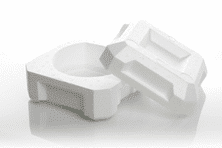
Mouldable foam
Ideal solution for packing a parcel that needs a protective coating. Applicable to any goods, it protects corners and edges, providing valuable protection.

Wrapping paper
It is used by creating a coating of about 5 cm by crumpling the paper around the goods.

Polystyrene filler chips / Polyethylene foam (PE) / Expanded foam (EPS)/eps (PU)
These are very lightweight products with high impact performance and which, after compression, regain their initial shape.

Moulded foam
It is also referred to as foam rubber or known as sponge rubber.
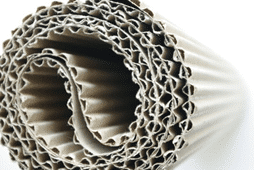
Corrugated cardboard
It consists of a 2- or 3-layer carton that protects the goods by creating a thickness with its container.

Modular packaging
One solution is to put one box inside the other, in order of size.

Pallet
It is a pallet or platform on which various goods or loads are placed.


Corners and protective profiles
Ideal for protecting the edges of objects such as furniture, paintings, etc.
3. Sealing correctly
- H sealingUsing adhesive tape, go through all the openings, drawing an H. Sealing must take place on all sides of the box, both top and bottom.
- A tape with a minimum width of 50 mm will serve to properly seal the box or parcel. Buy a quality product and also fix it in the grooves, if any, so that it seals perfectly.
- To limit the risk of damage to the cardboard, it is best to apply some plastic or cardboard protectors along the outer edges of the box.
4. Travel documents
Be sure to affix the waybill prominently on the box. Upon collection, the driver scans the label. If present, remove the old labels from the packaging.
5. What kind of goods do you wish to ship?
Different types of goods will correspond to the appropriate type of packaging, suitable to protect the same goods during the journey.
Here are some protection systems that allow a parcel to be packed securely to protect the goods. The choice of protection depends on the shipment (whether it is a international shipping or national and other factors).
For international shipments, the packaging rules remain the same, but additional restrictions may apply to the goods: Guide to international shipping.

Glass bottles

Aluminium Milk

Fragile Goods

Quadri

Displays

Electronic Items

Pallet furniture

Documents

CDS Vinyls

Books

Sporting Goods

Bicycles

Toys

Spare Parts, Wheels, Tyres
⛔ The 8 most common mistakes when packing
✘ Reusing cardboard boxes — Cardboard loses its strength. Always use new boxes, or check that any used cardboard is not crushed, damp or has damaged corners.
✘ Do not leave the 5 cm of padding — The contents must be at least 5 cm away from each side. Without adequate padding, the courier may reject a claim in the event of damage.
✘ Seal only the top closure — The parcel is turned over and handled from all sides. Seal all openings using the H-method, both at the top and the bottom.
✘ Use office tape or ordinary sticky tape — they cannot withstand the weight and knocks of transport. Use only packing tape that is at least 50 mm wide.
✘ Do not take a photograph of the contents before closing — Without photos, you cannot prove the original condition of the goods in the event of damage during transit.
To find out how to make a complaint: visit the complaints department
✘ Leave some empty space in the box — Empty spaces allow the contents to shift and bump against the sides. Fill everything with polystyrene, bubble wrap or paper.
✘ Writing “Fragile” in the hope of receiving extra protection — The ‘fragile’ label is useful, but couriers do not guarantee special handling. The only real protection is proper packaging.
✘ Do not remove the old labels — If you’re reusing a cardboard box, remove all barcodes and previous labels. Automatic sorting systems might scan the wrong code.
For further details on this point, please visit the CONAI — National Packaging Consortium

Glass Bottles
When packing a parcel to be shipped containing glass bottles, it is best to use compliant packaging that has undergone approval and approval by the carriers, as it must be packaged in such a way that it does not move inside the box:


- Make sure that the bottle is intact and that there are no damages or closure defects.
- Each bottle should be lined with absorbent and water-repellent materials.
💡 Practical tip: use the Sec Box — a box designed specifically for bottles, with moulded internal dividers. It is easy to assemble, requires no additional materials and ensures that each bottle is securely held in place. It is the most reliable system for transporting wine and spirits.
- Arrange the bottles inside crates equipped with dividers and fasteners, polystyrene tubes or polyethylene inner tube packaging systems or.
- Any packaging with newspaper sheets or bubble wrap will not be considered suitable.
- It is preferable to ship bottles with liquid separately from goods of a different type (books, clothing, etc.).
Use for packaging
Foam
Polystyrene

Modular Packaging
DO NOT use materials such as
Pluriball
Aluminium Milk
With Spedizionecomoda.co.uk you can also send cans of materials such as aluminium, containing oil for example, with a maximum capacity of 5 litres. It is preferable that each parcel to be sent contains a maximum of 10 litres of oil, for the convenience of the couriers and to avoid damage during shipment.


- Make sure that the cans are intact and that there is no damage or breakage in the locking system.
- Protect the cans with a sheet of polystyrene and fill any spaces or gaps in the package with polystyrene. Prevent the cans from bumping into each other.
- A final layer of polystyrene can be placed on top of the cans and the box can now be closed and sealed with adhesive tape.
- It is preferable not to place goods such as clothing or books in the box together with oil cans and/or other liquids.
Use for packaging
Foam
Polystyrene
Modular Packaging
DO NOT use materials such as
Pluriball
Fragile Goods
Packing a parcel with fragile goods requires special care and attention. Fragile goods can be shipped with express courier. Packaging plays a key role in guaranteeing the integrity of the goods. Keep in mind that all goods, even fragile ones, are transported in hubs, by means of machines and automatic belts, so they must be able to withstand the possible free fall of about 1.50 m.

- If you intend to ship fragile items, it is best to use two-layer corrugated cardboard boxes, so as to offer adequate protection from shocks and to allow other boxes to be stacked without risk of damage to your goods.
- At the base of the box, insert a filler, as well as at the sides and top, to protect fragile goods with at least 5 centimetres of thickness and to avoid shifting or the risk of the goods being thrown around during transport.
- Use foam cushions to wrap the goods and protect them from jolts or bumps. Simply place one on the base and one on top of the product.
Use for packaging
Foam
Polystyrene
Modular Packaging
DO NOT use materials such as
Pluriball

Paper
Quadri
If you have to send a parcel to send pictures with protective glass, apply “X”-shaped adhesive tape over it to prevent shattering of glass in case of breakage.
The ideal way to pack a package to be shipped with paintings is to wrap it with a large bubble wrap. Then wrap the painting with at least a double layer of bubble wrap, to offer maximum protection during transport, in case of shocks or jolts.


- The use of polyethylene foam corners will serve to protect the corners from knocks and bumps.
- The square can be housed in special modular containers made of rigid corrugated cardboard with an inner padding layer.
Use for packaging
Modular Packaging
DO NOT use materials such as
Pluriball
Cardboard
Displays
The display is placed in a cardboard box or inside a plywood container.

- Add approximately 5 centimetres of polystyrene on all sides to create a protective base.
- The polystyrene balls or air cushions will serve to fill the spaces and stop the product, preventing it from shifting or bumping.
Use for packaging
Pallet

Foam rubber

Angles
DO NOT use materials such as
Pluriball
Cardboard
Electronic Devices
When sending computers and other electronic devices, the package to be shipped should be packaged using the original manufacturer's packaging. In fact, the item to be shipped should be placed inside another box, using internal protective material.


- Most of the time, the box that contained the device is reused for the shipment, however, it must be kept in mind that reused packaging risks damaging what is contained in the shipped package.
- To limit the risk of damage to the goods during shipment, it is best to protect them with moulded foam rubber or foam cushions.
- Make sure that the goods in the package are at least 5 centimetres away from the edge of the box. This way shocks or blows will not damage the items.
- In the presence of electronic products, it is better not to use polystyrene, which can cause static electricity.
Use for packaging
Foam
Foam rubber
DO NOT use materials such as
Polystyrene
Pallets or Furniture
Spedizionecomoda.it does not carry out removals. However, you can ship furniture and other bulky personal effects that fall into the category of large packs non-standard. When packing a large package of bulky, non-standard goods, you must observe the following guidelines:


- Pallets are used to facilitate the movement of goods both for collection and during transport to the hubs and finally for delivery.
- For corner protection, use low-density polyethylene foam corners.
- Apply moulded foam rubber or foam cushions around the furniture to be shipped.
- The furniture can be housed in a cardboard or plywood container, with at least 5 cm of polystyrene on all four sides as a protective base. With polystyrene chips and/or air cushions, you can instead fill in the empty spaces and ensure that the furniture is perfectly secured within the packaging.
- Wrap the goods on the pallet with stretch film to prevent movement or shifting.
💡 A pallet is recommended for loads of 30–35 kg and above. For lighter loads, a reinforced box is sufficient. For pallets, wrap all the goods in stretch film, ensuring at least three complete turns — this prevents the goods from shifting during transport and protects them from the elements.
Use for packaging
Angles
Pallet
DO NOT use materials such as
Plain paper
Brochures, Folders, Documents
If you need to send drawings, documents, maps, blueprints etc., we recommend:

- Place the product inside a protective plastic wrapping to protect against moisture
- Place the product inside a container or other type of die-cut, which has a closure, or in a tube specifically for this type of goods, and suitable for the protection of documents that are not folded and can be rolled up.
Use for packaging
Modular Packaging
DO NOT use materials such as
Pluriball
Plain paper
Vinyls or CDs
To send a parcel containing drawings, maps, documents, blueprints, etc., you will have to:


- Pack the goods to be sent in a closable die-cut box.
- For outer packaging, use a double corrugated cardboard box, applying polystyrene of about 5 centimetres on all sides for protection during transport.
- Better to package each product separately and use dividers.
Use for packaging
Modular Packaging
DO NOT use materials such as
Pluriball
Plain paper
Books
The books are packed in resealable die-cut cardboard.


- To pack, use a cardboard box, preferably corrugated, and apply polystyrene about 5 cm thick on all sides, which will be useful to protect the package during transport.
- We recommend packing each item separately and using dividers.
Use for packaging
Modular Packaging
DO NOT use materials such as
Pluriball

Simple envelope
Sporting Goods
When shipping sports goods, they must be wrapped one by one in bubble-wrapped plastic sheets that are able to protect surfaces and prevent damage. This protection is also suitable for light objects, and is suitable for packing a parcel to protect many types of products, whatever their size.


- Take care to protect the edges.
- Items must be packed individually, on all sides, including edges.
- Be sure to wrap each product with about 5 cm of plasticised foam, placing it at a distance of about 5 cm from the box. In this way you will limit the risk of damage from shocks and protect the products from jolts and vibrations.
- Make sure you use the right amount of sheets to prevent the contents from being thrown around during transport.
Use for packaging
Foam
Angles
Pluriball
DO NOT use materials such as
Plain paper
Bicycles
Before packing the parcel to be shipped containing a bicycle, make sure that you have dismantled and unscrewed the pedals, wheels, saddle and handlebars. These items must be packed separately. Don't forget to collect screws and bolts inside a bag, which you can tape to one of the bicycle parts. This will facilitate reassembly manoeuvres.

- Wrap the bike components individually with bubble wrap until adequate protection is achieved.
- Use a cardboard box, if possible double corrugated, applying polystyrene of about 5 cm on the sides, which will improve protection during transport.
- Check that the edges of the various accessories do not collide with each other and that there are no gaps that encourage movement during transport. Use moulded foam or polystyrene chips.
Use for packaging
Foam
Angles
Pluriball
DO NOT use materials such as
Simple card
Games Toys
Pack the objects separately with plasticised sheets to protect the surfaces from scratches or other damage. This is a suitable protection system for any product, of any forge or size.


- Carefully protect the edges.
- Separate items from each other on each side, including high and low.
- Be sure to wrap each product with 5 cm of plastic foam sheet, placing it at a minimum safe distance from the box. This will limit the risk of damage from shocks and protect the products from jolts and vibrations.
- Use the appropriate number of sheets to ensure proper protection of the items.
Use for packaging
Foam
Angles
Pluriball
DO NOT use materials such as
Plain paper
Wheels, Tyres, Parts
Separately packaged products with small bubble wrap to ensure perfect protection of surfaces and against scratches. This is a protection system not only for light objects, but also for any other products of all shapes and sizes.


- Carefully protect angular parts.
- Separate items from each other on each side, including high and low.
- Be sure to wrap each product with 5 cm of plastic foam, placing it at a minimum safe distance from the box. This will limit the risk of damage from shocks and protect the products from jolts and vibrations.
- Use the appropriate number of sheets to ensure proper protection of the items.
- If you have to pack a package to be shipped with doors, bonnets or wings, it is better to use rigid packaging that does not deform. In fact, the packaging must be able to protect the product adequately, preventing it from moving.
- To ship tyres with an express courier, use crates, pallets or boxes. Finally, remember that the shipping cost is calculated according to size and weight.
Use for packaging
Foam
Pluriball
Angles
DO NOT use materials such as
Plain paper
❓ FAQs — How to pack a parcel
Bubble wrap is the most versatile choice for fragile items of any shape. Wrap each item individually in at least three layers, making sure to cover the corners as well. For very delicate items, use foam or foam cushions, which mould to the shape of the item. Remember: leave at least 5 cm of padding between the item and the sides of the box.
Yes, but check it first: it must be in one piece, with no crushed corners or damp patches, and it must not have been used more than once (the cardboard loses its strength). Always remove all old labels and barcodes — the couriers’ automated systems might scan the wrong code.
Single-wall cardboard (a single corrugated layer between two flat sheets) is suitable for light, non-fragile items such as clothes, books and documents. Double-wall cardboard (two corrugated layers) is much stronger and must be used for fragile, heavy or electronic items. If in doubt, always use double-wall cardboard.
Use packing tape that is at least 50 mm wide. Seal using the ‘H’ method: one strip across the centre, then two parallel strips down the sides. Repeat this on all sides of the parcel — top, bottom and all four sides. Do not use office tape or standard clear adhesive tape: they cannot withstand the weight and knocks of transport.
Yes, it is useful as a visual indicator, but express couriers do not guarantee special handling for parcels labelled ‘fragile’. The goods are still transported on conveyor belts and are potentially subject to knocks. The only real protection is proper packaging with plenty of padding.
The best method is the Sec Box — boxes specially designed with moulded dividers for each bottle. If you don’t have a Sec Box, wrap each bottle in absorbent, water-repellent material (not just ordinary bubble wrap) and use polystyrene dividers to prevent the bottles from touching each other. Do not mix bottles with other types of goods in the same box.
Yes, this is strongly recommended. Take a clear photo of the contents before closing the box, then take a photo of the closed and wrapped parcel. In the event of damage during transit, these photos serve as your evidence when making a claim with the courier. Without photographic evidence, it is much more difficult to obtain a refund.
Are you unsure how to pack your parcel? Chat with Sophia on WhatsApp — replies immediately
Is the parcel packed and ready? Find out how to place a delivery order in 6 steps.