The 7 G model for optimising business logistics
La corporate logistics is often approached as if it only included the transport of goods, but in reality it is a much more complex process, which begins with the sourcing of raw materials and continues with their storage, the packaging of goods and their delivery.
Therefore, being able to optimise all stages of this process is crucial if you want to increase both the productivity and competitiveness of your company.
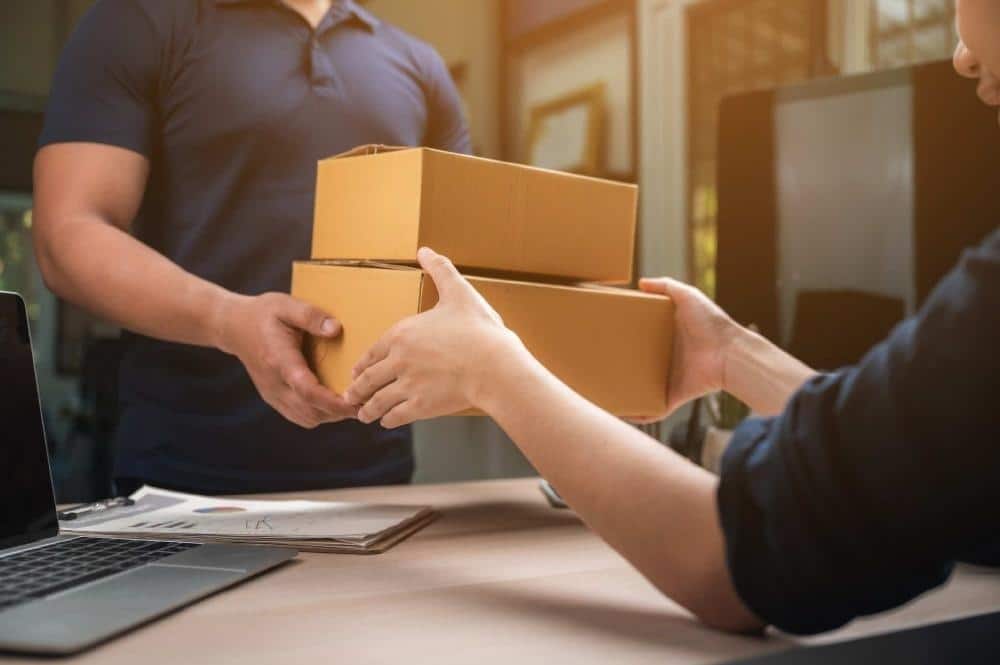
Finding a way to make the entire business logistics process as effective as possible seems very difficult, especially because of its complexity, but there are methods and models that can help us, such as the 7 G model we will discuss in this article.
Let's go straight away and see what it is and how this model can help us optimise the logistics of our business.
What is the 7 G model for logistics
By “Model 7 G” we mean seven fundamental factors that need to be managed in the right way to optimise company logistics, and in particular these are:
1) Right product
2) Right place
3) Right price
4) Right customer
5) Right conditions
6) Right time
7) Right quantities
To better understand the meaning of these words, we can think of them as the objectives that company logistics must set itself in the delivery of its products, which must be in the right quantities, at the right time and place, at the right price, under the right conditions and, above all, to the right customer. Therefore, it is important that the entire logistics process is efficient, reliable and fast, in order to offer the end customer a top-quality service.
Let us therefore look in more detail at what the 7 Gs of logistics we have just listed consist of, and how they can be integrated into a corporate logistics optimisation strategy.
The right product
Corporate logistics must take into account the fact that each product has its own peculiarities, and therefore, depending on these, the most suitable mode of transport must be chosen. At the same time, a product designed with an eye on logistics could greatly simplify all processes of storage, packaging and shipping parcels, bringing numerous advantages to the company.
The right place
Clearly, it is essential that products are delivered to the correct address, and in this case, technology can come to the aid of simplifying this process, either through software that optimises routes of the courier also for the international parcels.
This makes it easier both to track the progress of shipments and to organise the different trips, always having feedback to analyse in order to improve or expand the strategy.
The right price
For a company to remain competitive while generating profit, it is essential that products are sold and shipped at the right price, This can be done by using software that analyses the price fluctuations of a given commodity in the geographical area of interest, so as to be able to adapt to the market in which one operates.
Returning to the previous point, optimising the routes of the parcel deliveries can help reduce shipping costs, generating additional profit for the company.
The right customer
Identifying and profiling your typical customer is essential to carry out numerous activities in a company, including everything related to logistics.
Once you know your target audience, you can move in the market more consciously, and thus be able to set targets, allocate budgets correctly and measure the efficiency and quality of different operations.
The right conditions
Another fundamental thing is that the product sold arrives at its destination in excellent condition, This makes it essential that the products are packaged and transported correctly.
This is particularly important for example in the transport of products that need to be stored at low temperatures, and for which it is necessary that these conditions are respected during the entire transport, storage and possible interchange phase.
Here, too, various devices and software have been introduced that allow the temperature of storage and transport facilities to be monitored at all times, so that faults can be detected immediately and repaired in the shortest possible time, guaranteeing product preservation.
The Right Time
Le timelines are a key factor when it comes to logistics, because customers expect to receive the products they have ordered faster and faster, but this also applies, for example, to the ups deliveries of foodstuffs, which must be able to be sold to final consumers before they are perished.
Therefore, also for this reason, it becomes essential planning and optimising shipment routes, in which companies can be supported by specific software.
The right quantities
The last of the 7 Gs we listed concerns the quantity of a product, which must be adapted to customer demand, so as to avoid waste and unnecessary expenditure. Thus, optimising logistics also means not keeping unsold goods in stock, which risks becoming obsolete and increases the costs of storing goods. Again, there is software called Warehouse Management System which allow the control and coordination of all operations taking place within the company's warehouses.
How to optimise business logistics with the 7 Gs
The 7 Gs we analysed in the previous paragraph allow us to make all phases of company logistics efficient, thereby also increasing customer satisfaction with the products and improving the service offered to them by the company.
To develop a strategy in this area, the starting point must be a’precise analysis of its logistics and production processes, so that we can constantly monitor our own activities, but we also need to compare ourselves with the strategies used by those operating in our own market in order to remain competitive and adapt to changes in the sector.
With this objective in mind, various software and digital logistics, which simplify the management and optimisation of all the various steps that go to make up business logistics, while at the same time allowing you to keep track of the results of your strategies, so that you can change them on the fly if you are not getting the results you set out for.