How to pack a parcel: Spedizionecomoda.co.uk's 7 tips
When sending a parcel via express courier one of the most common thoughts is: “will my shipment arrive safely at its destination?”
Indeed, you may have received a parcel and, on opening it, discovered that the contents you were expecting were completely unusable.
In this case, without a’supplementary insurance on damage to goods in transit, you will not receive compensation for broken items.
The articles of the Civil Code 1693 and 1696 require the courier to provide the sender with a refund by only one euro per kilogram of goods.
Unfortunately, this compensation is almost never equal to the actual value of the contents of the parcel.
What can we do to ensure that we do not find ourselves in such an unpleasant situation?
How to get the parcel at destination fully intact?
- Entrust your shipment to couriers whose experience guarantees safe handling of all shipments.
- In addition, packing at its best your shipment by using suitable materials to protect it will reduce the possibility of damage to almost zero.
- Finally, it is always advisable to opt for a insurance for your package.
The choice of courier suitable e the care with which you package the package for your shipment are the main factors in ensuring that the goods arrive undamaged at their destination.
Let's see together how best to pack your parcel.
Index
What types of packaging exist for shipments?
To help you better prepare your shipment, We will analyse together the different types of available packaging solutions for your package.
In fact, there is a wide selection of materials suitable for protecting the goods to be sent, to be selected according to the type of object you intend to send.
The market offers various packaging materials, including
- paper,
- plastic,
- polyurethane foam,
- bioplastics,
- and recyclable and biodegradable products.
Each material is suitable for protecting certain objects.
To protect your shipment, simply choose the right combination of materials depending on the item you intend to ship.
For example, imagine you have to send a book: in this case, packaging will require relatively little attention.
If, on the other hand, you are planning to send bottles of wine or oil to a relative or customer in another region, you will need to take more care and choose materials that will cushion any shocks.
So, it will be up to you to prepare the most suitable packaging to protect your shipment, depending on the type of transport you choose and how much you are willing to spend on the purchase of materials.
But don't worry, to better assist you we have prepared: a guide that will help you create a perfect packaging in a few simple steps and with an eye on expenses.
What are the essential packaging materials?
Unfortunately, as already mentioned, there is no single packaging material suitable for every type of shipment.
Consequently, to choose the one that best protects during transport, you should base yourself on the object you intend to ship.
As anticipated, there are a wide variety of materials to choose from. However, the following elements are always necessary:
- A box with dimensions suitable for the contents of the shipment;
- The material with which to cover each item contained in the package to protect it from any impacts;
- Some material to fill the best possible spaces between the objects in the package, so as to avoid movement during transport.
These three factors are fundamental for effective packaging. Depending on the type of item to be shipped and its value, you can choose to use more or less resistant materials.

Packing a parcel effectively: what steps to follow?
Depending on the goods you want to ship, the packing of your parcel will require more or less care.
In fact, it is clear that packing a strong object will be easier than packing an angular or fragile object.
Similarly, the packaging of fragile goods, such as bottles of wine, oil, or cosmetic items, will require extreme care. Possible shocks will have to be properly attended to.
To make your shipment overload, collision or drop-proof, we recommend:
- Choose a box external appropriate and seal the opening at the bottom with plenty of tape;
- Cover the inside of the box with protective material;
- Wrap each object to be sent with of suitable material, impact-resistant;
- Place the objects inside the box in an orderly manner. This will reduce their movement during transport;
- Use filler material to fill in any gaps between objects;
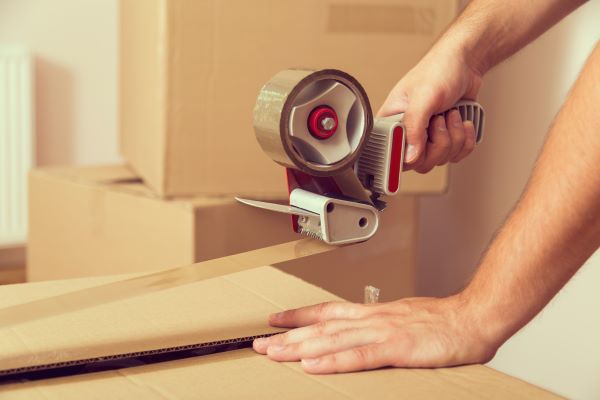
- Sealing the box with quality adhesive tape.
- If necessary, protect the corners of the box with adhesive tape.
Once you have completed the 7 steps described above, you can confidently entrust your parcel to the courier.
Packing a FRAGILE parcel
You might ask yourself: shipping a fragile parcel involves a different packaging procedure from the one described above.
The answer is no. In fact, the packaging method remains identical. A variouskings are materials packaging you will have to use.
In order to best prepare the shipment of a fragile parcel, it is essential to opt for materials that guarantee the stability and protection of the goods inside the box.
In this case, we advise you to use of bubble wrap or of air pockets.
These materials will perfectly cushion any abrupt movements during transport.
Packing a HEAVY package
When packing a heavy package, the factor that really makes a difference will be quality of box, which must be necessarily robust.
Opt for a new box, choosing one made of triple-wave cardboard.
This is the best choice for heavy packages. In fact, due to their thickness, these boxes can hold up to 500 kilograms of goods.
Packing a SMALL parcel
Packaging a small package will require less care than for fragile or heavy packages.
In this case, you can recycle a box you already own.
For extra protection, simply wrap the items individually with newspaper or gift wrap.
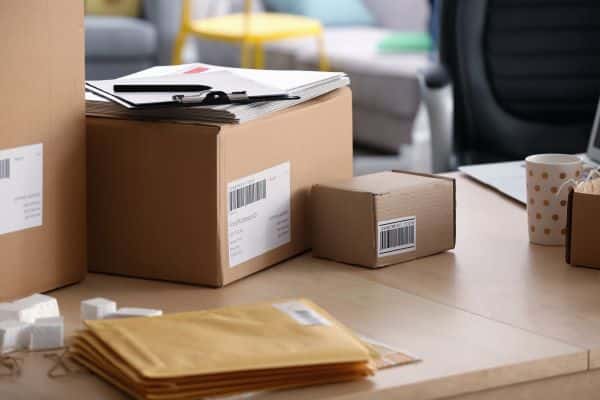
Packing your shipment: Boxes and Envelopes
After analysing all the necessary steps for the perfect packaging of your shipment, let's look at the best materials to ensure the security of your package.
Let us start with the outer casing, and thus the box which will contain your goods.
Depending on the fragility of the object you want to send, you will have to choose a more or less resistant box.
The boxes available for packaging are:
- Single wave (or simple wave);
- Double wave;
- Triple wave.
More waves equals greater resistance and, consequently, greater cost.
A single-wave box will be suitable for small and lightweight objects, and will be cheaper than a triple-wave box.
It will be up to you to find the right compromise between cost and performance.
Where do you buy boxes and envelopes for shipping?
For the purchase of quality packaging boxes, you can rely on several specialised eCommerce shops that offer a wide variety of cardboard boxes at different price ranges.
Instead, if you prefer not to buy from online stores, you can opt for physical retailers with specialised departments for shipping packaging, such as Leroy Merlin or others.
Where to find cardboard boxes?
Buying your boxes online or in shop are not the only options available to you. In many cases, you can reuse boxes you already own for your shipment.
The important thing is that they are not too worn and that they can withstand one more trip to their destination.
Recycling boxes for your shipments is a cost-effective and environmentally friendly choice.
If you could not find any boxes at home, you could, for example, turn to local shops or supermarkets.
In most cases, they will be willing to give you the boxes in which the products now on sale arrived.
For shipping small parcels, you can also opt for shoe boxes or small appliances.
Remember to pay attention to the homogeneity of the surface of recycled boxes.
We recommend wrapping these boxes in wrapping paper to make them more difficult to tamper with.

Packing your shipment: protective materials
Let us now look at the different options for protecting the objects contained inside the box or parcel: protective materials.
Again, you will be spoilt for choice. You can choose from a wide range of types and materials, each with different degrees of protection.
Below you will find a list of the most commonly used protections for packing shipments:
- Foamed polyethylene sheet;
- Plastic bubble wrap;
- Bubble bags;
- Mouldable foam;
- Wrapping paper;
- Corrugated cardboard for packaging;
- Corners and protective profiles.
Among the materials listed most used are the bubble wrap e the wrapping paper.
These two materials not only guarantee the security of the goods, but also offer excellent value for money.
How to use bubble wrap
Bubble wrap is an excellent protection material for fragile objects or objects containing liquids.
Its air bubbles provide this material with strong cushioning power and make it a versatile option suitable for different types of shipping.
Pre-cut sheets or rolls of bubble wrap can be purchased.
In the latter case, we recommend using enough to wrap your object with at least two layers of material.
To prevent the packaging from being opened, we recommend sealing the bubble wrap with adhesive tape to provide extra protection.
Also, if you want to give the packaging more protection, you can use bubble wrap to wrap the sides of the box.
Così by doing so, you will ensure a real Convenient shipping.
Wrapping paper: when and how to use it?
If your shipment does not contain fragile items, you can use wrapping paper as a protective material.
This is not made up of shock-absorbing bubbles, but still limits the movement of objects inside the box and cushions their impacts.
Furthermore, wrapping paper has a dual use: it serves both as protection and as a filling material.
Preparing objects for Parcel Shipping will be very simple. Just cut the paper and use it to wrap them.
All you have to do is take care to wrap the items and fill in the blanks in the box.
The wrapping paper will perfectly protect the contents of your parcel.
Packing your shipment: filling
The last, but not least, ingredient for effective packaging is the filler material.
To prevent objects from moving during transport, the empty spaces inside the box must be filled.
In this way, the risk of damage will be practically zero.
The filling materials that SpedizioneComoda.co.uk recommends are:
- Styrofoam filler chips;
- Bubble bags;
- Moulded foam;
- Wrapping paper;
- Mouldable foam.
Costs and filling ability vary substantially depending on the material.
Sustainable and plastic-free filling materials..
In recent times, public awareness of environmental policies has increased exponentially.
For this reason, both companies and consumers seek sustainable solutions for reduce its ecological footprint and respect the our planet.
The shipping and packaging industry is also adopting practices that increase its environmental sustainability.
These include the production of new types of packaging that are environmentally friendly.
In fact, there are several companies that have based their sales strategy on sustainable packaging and produce reusable packaging.
Using sustainable or recycled packaging material is certainly beneficial to the environment.
The evolution of the packaging market has led to the creation of increasingly planet-friendly alternatives, such as packaging made of recycled plastic or completely free from plastic.
Sustainable alternatives include:
- FSC-certified boxes (Forest Stewardship Council). FSC certification guarantees that the product comes from responsibly managed forests and production chains according to certain environmental standards;
- Velcro-fastened boxes which allows them to be reused several times without large amounts of adhesive tape, reducing waste production.
- Protective material in honeycomb paper or inflatable bioplastic bags. Both materials are produced from plant materials such as algae or maize, and are therefore biodegradable and compostable.
- Filling corn chips, instead of polystyrene.
- Labels and paper adhesive tapes, instead of plastic.
Thanks to widespread environmental awareness, it is possible to choose from a wide range of sustainable packaging and be “greener” in shipping as well.
Seven tips from SpedizioneComoda.co.uk for packing your parcel in the best possible way
Making a perfect packaging is the determining factor in ensuring that the content of your shipping arrivals integra to destination.
Please follow these practical and simple tips that will help ensure the safety of your package:
- Don't be in a hurry when packing your shipment. Taking the right amount of time for packaging is crucial to ensure the protection of your package.
- It opts for packaging materials with good value for money. Always remember to assess the durability and quality of the materials you choose, without automatically opting for the cheapest option;
- Choose carefully the type of packaging depending on the goods you intend to ship;
- Recycle packaging, especially boxes. Reusing boxes is good for both your wallet and the environment. For shipping heavy or fragile packages, however, we recommend you opt for new packaging materials;
- Choose the bubble wrap for the fragile objects and the wrapping paper for the other shipments.
- Fill in the gaps to avoid shocks. Limiting the movement of items during transport will ensure a safer shipment.
- Choose sustainable packaging, such as plastic-free and biodegradable materials.
In addition, in the section packing a parcel, you can familiarise yourself with the packaging materials described above and their use depending on the object to be shipped.
Pay attention to these tips and your shipments will arrive undamaged at their destination!