EUDR and International Shipments: What Will Change for Businesses from 30 December 2026
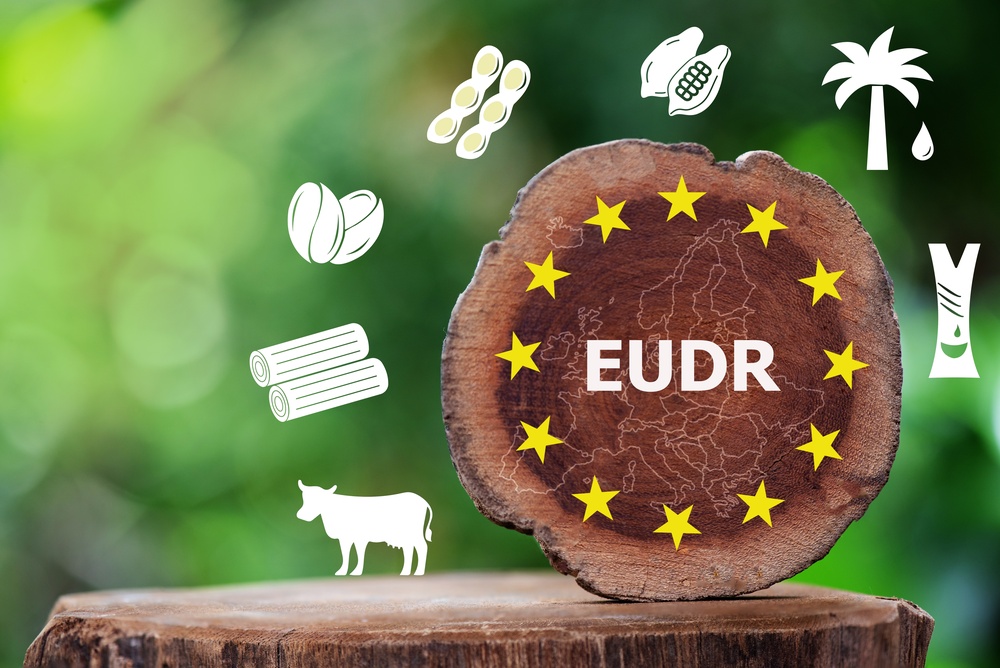
From 30 December 2026, the EUDR (European Union Deforestation Regulation) – namely Regulation (EU) 2023/1115 of the European Union on deforestation and forest degradation – will come into force for medium-sized and large enterprises.
If your company exports or imports goods from non-EU countries and your goods fall within the relevant categories, you must take immediate action: without the correct documentation, your international shipments They will not be cleared through customs.
In this article, you’ll find everything you need to know: who it applies to, which goods it covers, what practical steps to take, and the deadlines you mustn’t miss.
What is the EUDR and Why Does It Affect Shipments?
The EUDR is the European Union Regulation which requires companies to demonstrate that products placed on the European market — or exported from Europe — do not originate from recently deforested areas and have not contributed to forest degradation.
The Regulation came into force on 29 June 2023, but the operational requirement for consignments takes effect on 30 December 2026. From that date, couriers — including DHL, UPS and FedEx — will not be able to include shipments lacking the mandatory EUDR documentation in their customs declarations. The practical result: the parcel will be held up at customs.
Who the EUDR Applies To — Deadlines by Company Size
The EUDR classifies companies by size. There are two operational deadlines:
| CATEGORY: | NET ASSETS: | NET REVENUE: | EMPLOYEES: | EUDR DEADLINE: |
| Micro-enterprises | < €450,000 | < €900,000 | < 10 | 30 June 2027 |
| Small businesses | < €7,500,000 | < €15,000,000 | < 50 | 30 June 2027 |
| Medium-sized enterprises | < €25,000,000 | < €50,000,000 | < 250 | 30 December 2026 |
| Large companies | > €25,000,000 | > €50,000,000 | > 250 | 30 December 2026 |
| ⚠️ Please note: small and micro-enterprises are not exempt — they simply have more time. From 30 December 2026 to 30 June 2027, they must enter exemption code Y141. From 30 June 2027, they must submit the full Due Diligence Statement. |
See also: Shipping to Europe from Italy
Which Goods Are Subject to the EUDR?
The EUDR applies to commercial B2B and B2C consignments to or from non-EU countries, regardless of the value of the goods.
The seven commodities “at risk of deforestation” covered by the regulation are: cattle, cocoa, coffee, oil palm, natural rubber, soya and timber. The regulation also covers derived and processed products containing these substances.
Main Sectors Involved
| SECTOR: | EUDR RAW MATERIAL INVOLVED: |
| Food and drink | Coffee, cocoa, palm oil, soya |
| Animal feed and animal husbandry | Soya, cattle |
| Paper, cardboard and packaging | Wood |
| Furniture and wood | Wood |
| Automotive, rubber and tyres | Natural rubber |
| Cosmetics, chemistry, pharmaceuticals | Palm oil and derivatives, natural rubber |
Update: September 2026: Delegated Regulation (EU) 2026/2102, which entered into force on 17 September 2026, amended Annex 1 by introducing a number of exclusions: leather and bovine hides are now excluded from the EUDR; certain categories of rubber products (conveyor belts, retreaded tyres, and some vulcanised rubber products) have also been removed from the scope of application.
Important note: Printed matter (customs chapter 49) is excluded from the EUDR. Paper (chapters 47 and 48), however, remains included.
For more: Items prohibited from being posted
What Companies Need to Do in Practical Terms
There are two options: either submit the Due Diligence Statement or provide an exemption code. In both cases, the code must be submitted electronically to the courier when the consignment is created.
Option 1 — The Due Diligence Statement (DDS)
The Due Diligence Statement (DDS) is the due diligence statement required under the EUDR. The company must:
- Gather information on the goods and their production chain (origin, traceability, compliance with the legislation of the country of production)
- Access the European Commission’s EUDR Information System
- Complete and record the DDS in the system
- Provide the DDS code (C716) to the courier when creating the consignment
The responsibility for holding and providing this information lies with the exporter/importer, not the courier.
Option 2 — The Exemption Code
In some situations, it is possible to avoid the full DDS, but you must still specify the relevant exemption code on the consignment. Here are the main codes, updated as of September 2026:
| TARIC CODE: | WHEN TO USE IT: |
| C716 | Full Due Diligence Statement — main code for medium-sized and large enterprises |
| C717 | Simplified tax return — for micro and small primary enterprises (30 December 2026–30 June 2027) |
| Y129 | Goods with an “ex” customs code: the specific product is not covered by the EUDR, even though its customs code is among those affected |
| Y132 | Products manufactured before 29 June 2023 |
| Y133 | Used, second-hand, recycled or end-of-life products |
| Y141 | Small and micro-enterprises (valid only until 30 June 2027) |
| Y142 | Non-commercial consignments: C2C, free samples of negligible value |
| Y187 | Samples for analysis, testing or examination |
| Y190 | Disposable or reusable packaging when used solely as a container |
| Y191 | Products used in the manufacture of medicines |
| ⚠️ Exemption codes do not remove the EUDR obligation — they simply document it. These must always be included in the consignment: without them, customs cannot clear the goods, even if they are technically exempt. We recommend that you check the applicability of each code with your customs adviser or directly via the European Commission’s EUDR portal before using it. |
How to Provide the Code to the Courier
The procedure depends on the system you use to create consignments:
• If you use MyDHL+: the fields for entering the DDS code and the EUDR exemption code are already available on the platform.
• If you use API systems or custom interfaces: your IT department must liaise with the courier’s IT specialists to define the fields to be used when transmitting customs data.
• If you’re sending your parcel via SpedizioneComoda: there are two ways to provide us with the tracking number. The quickest way is to enter it directly into the notes field on the online order form, in the “What is being shipped / goods description” section, specifying the applicable EUDR code (e.g. C716, Y141, etc.) alongside the description of the goods. Alternatively, you can contact our customer support team, who will guide you through the correct procedure.
Dates to Mark in Your Diary
| DATE: | WHAT’S HAPPENING: |
| 29 June 2023 | EUDR Regulation (EU) 2023/1115 enters into force |
| 17 September 2026 | Delegated Regulation (EU) 2026/2102: update to Annex 1 (exclusion of leather/cowhides, reduction in rubber) |
| 30 December 2026 | Medium and large enterprises: DDS requirement or exemption code for all shipments outside the EU |
| 30 December 2026 | Small and micro-enterprises: requirement to enter code Y141 for customs clearance |
| 30 June 2027 | Small and micro-enterprises: full DDS requirement (expiry of Y141) |
FAQ — EUDR and International Shipments
Does the EUDR apply only to imports, or does it also apply to exports?
Both. The EUDR applies both to imports into the European Union and to exports from the EU to non-EU countries, for all goods covered by Annex 1 of the Regulation.
If I dispatch goods that do not fall within the EUDR categories, do I need to do anything?
No. If your goods do not fall within the seven raw materials and their derivatives as defined in Annex 1 to Regulation (EU) 2023/1115, the EUDR does not apply and no additional documentation is required. If you are unsure about the customs code for your goods, check with your freight forwarder or customs adviser.
What happens if I send a consignment without a DDS code or exemption code after 30 December 2026?
The consignment cannot be cleared through customs. The courier cannot include a consignment lacking the required EUDR documentation in the customs declaration. The goods are held up at customs, with all the resulting costs and delays.
Will the TARIC code for my goods change under the EUDR?
No. The TARIC code of the goods remains unchanged. The EUDR introduces additional customs codes (the “TARIC document codes”, such as C716, Y141, etc.) which are added to the customs declaration as supplementary documents, without changing the commodity code of the goods.
Where can you obtain the Due Diligence Statement?
The DDS is obtained by accessing the European Commission’s EUDR Information System (EUDR portal). The company must register, enter details of the goods and the production chain, and receive the DDS code to pass on to the courier. The European Commission has published training materials on the portal.
See also: FAQ – Frequently Asked Questions